Thank you for taking the time to support our vital work.
We really do need you right now.
2023 has been one of the hardest years we’ve ever seen. Families, communities and livelihoods have been destroyed through frequent and deadly extreme weather events – earthquakes, heatwaves, fires, floods, storms – and through ongoing and escalating conflict.
In a crisis, people’s lives depend on us being there. But to be there, we need your help, right now.
Why your donation matters to us
In an emergency, every second counts – every pair of hands makes a difference, and so does every penny. These are the moments that demand our best. And the faster and stronger our response, the more lives we can save and support in the aftermath.
But to be there for people, we need your help. More and more disasters are happening, and the need is increasing, stretching out vital services. The rising costs that affect you, affect us as a charity as well.
We know times are tough. Just like you, we have to do more with money that just doesn’t go as far as it used to. But we can’t let people in crisis pay the price of this with their lives.
Whatever you can give will add up to support people. Please don’t wait to donate.
Help the British Red Cross' work with a donation today.
Why do we ask for monthly donations?
A regular monthly donation to the charity helps us plan our work, because it helps us know how much income we’ll have in the future. It also allows you to plan your giving and gives you the flexibility to change it at any time.
And don’t ever think your gift is too small. Whatever you can give will help us be here for humanity – responding to emergencies, planning for future ones, and building strong, resilient communities in the UK and 192 other countries around the world.
People need us right now, and we need you.
Sign up to donate to the British Red Cross.
How your donation could help
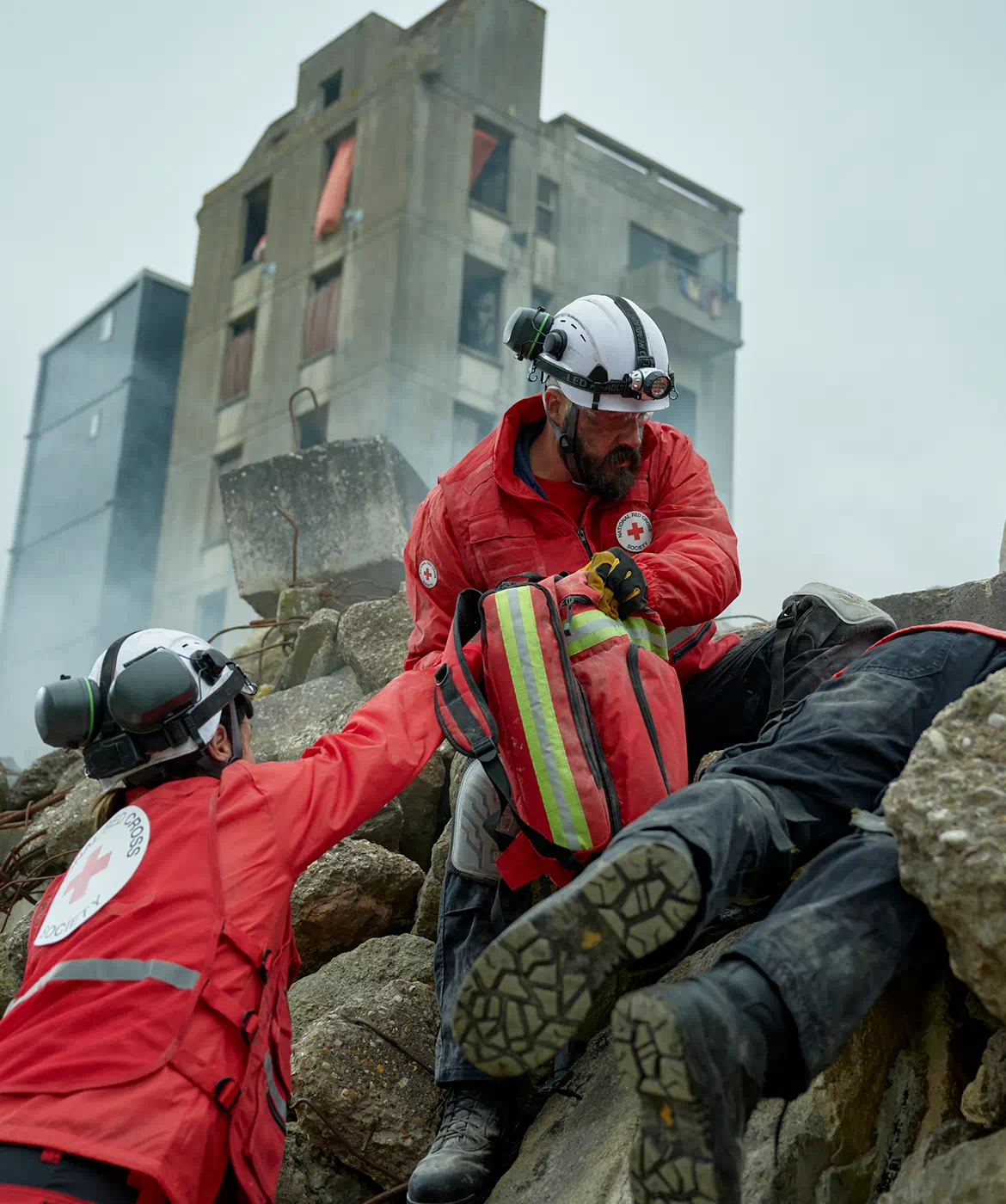
Our teams on the ground provide people in crisis, in the UK and around the world, with:
- food, clean water, shelter, clothing and first aid in an emergency
- emergency response services
- refugee support services
- support to victims of modern slavery and trafficking
- wheelchair services
- help to find missing family
If you're able to support the British Red Cross with a one-off or monthly donation, every time you hear about our work, you’ll know you’ve played a part in it.
Donate to the British Red Cross.
Donating to other Red Cross appeals
You can also donate to appeals that help people specifically affected by emergencies in Israel and the Occupied Palestinian Territory, Morocco, Libya, Afghanistan, Turkey-Syria, Somalia, Pakistan, Ukraine, Yemen, the UK or Syria.
We refuse to ignore people in crisis. We help people cope with disasters, conflicts and personal crises in the UK and overseas.